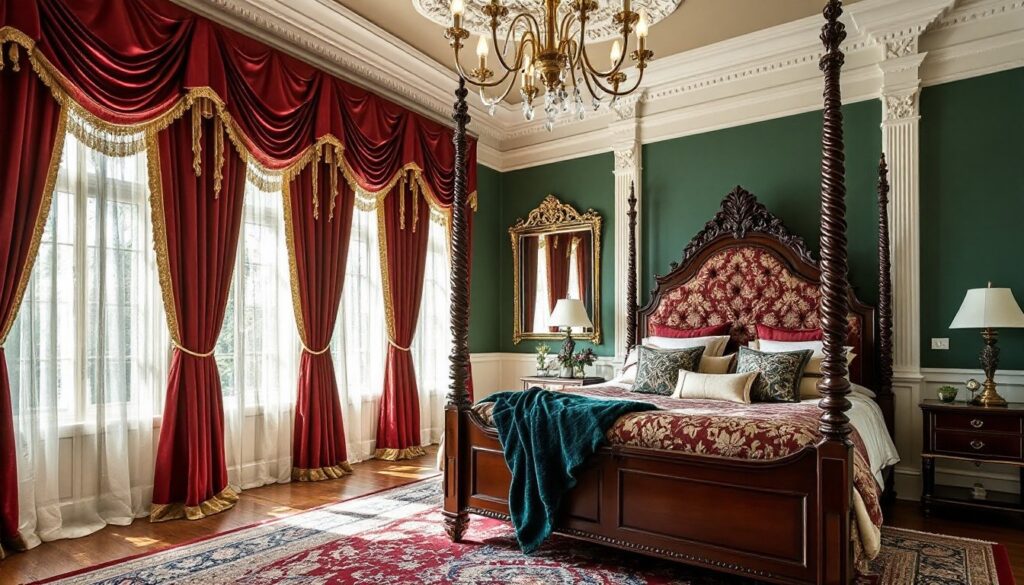
Victorian bedroom design channels the grandeur of the 1837-1901 era when ornament, craftsmanship, and rich materials defined domestic interiors. Unlike minimalist trends, this style embraces layering, multiple textiles, detailed woodwork, and decorative accents that create warmth and visual depth. Achieving an authentic Victorian look doesn’t require architectural bones from the period: it’s about combining the right furniture profiles, color depth, and textile weight. Whether working with a vintage victorian bedroom in an older home or adapting the style to a modern space, the key is balancing opulence with livability. This guide breaks down the practical elements, from crown molding to bed frames, that make a Victorian bedroom functional and beautiful.
Table of Contents
ToggleKey Takeaways
- Victorian bedroom ideas emphasize layered textiles, ornate architectural details, and jewel-toned color palettes that create warmth and visual depth without requiring original period architecture.
- Install 3.5 to 5-inch crown molding, ceiling medallions, and picture rails at 32–36 inches from the floor to authentically anchor your Victorian bedroom design.
- Choose rich, saturated wall colors like deep red or emerald green, and consider two-tone treatments with darker tones below the chair rail for rooms with 9-foot ceilings.
- Select substantial Victorian-style furniture with carved details and turned legs—prioritize the bed frame as your focal point with a headboard at least 60 inches tall.
- Layer bedding with high-thread-count linens, heavy coverlets in damask or brocade, decorative shams, and plush throws to capture authentic Victorian comfort and texture.
- Install multi-layered window treatments with heavy velvet or brocade drapes, lace sheers, and valances hung 4–6 inches above the window frame for period-correct elegance.
Key Elements of Victorian Bedroom Design
Victorian interiors prioritize architectural detail and vertical emphasis. Start by assessing your room’s existing features: crown molding, baseboards, and ceiling height all influence how well Victorian elements will read.
Crown molding should be at least 3.5 to 5 inches tall to match the era’s proportions. If your room lacks it, install primed MDF or polyurethane molding, both hold paint well and cost less than milled hardwood. Use a miter saw for clean corner joints: a coping saw works for inside corners if you’re comfortable with the technique.
Wainscoting or picture rail molding adds period-correct detail at the 32- to 36-inch mark from the floor. Picture rails were functional, Victorians hung artwork from them using chains or cords to avoid damaging plaster walls. Install using construction adhesive and finish nails into studs.
Ceiling medallions around light fixtures reinforce the ornamental approach. Opt for 16- to 24-inch diameter medallions in plaster or lightweight urethane. Larger rooms can handle bigger medallions: keep proportions in check.
High ceilings (9 feet or more) showcase Victorian details best, but standard 8-foot ceilings can work if you avoid heavy, dark treatments on upper walls. Paint the ceiling a shade lighter than walls to create perceived height.
Color saturation, textile layering, and furniture with turned legs or carved details complete the formula. Think of each element as part of a composed scene, not isolated decor.
Choosing the Perfect Victorian Color Palette
Victorian color palettes were jewel-toned and saturated, emerald green, ruby red, sapphire blue, and deep plum dominated. Advances in synthetic dyes during the 1850s made these hues affordable and popular. Modern interpretations soften the intensity slightly but keep the richness.
Wall colors should anchor the room. Consider Benjamin Moore’s Caliente AF-290 (a deep red) or Farrow & Ball’s Railings No. 31 (charcoal with green undertones). If bold walls feel too heavy, use saturated color on an accent wall behind the bed and pair it with cream or taupe on remaining walls.
Two-tone wall treatments were common: a darker color below the chair rail or picture rail, lighter above. This visually lowers the ceiling, so reserve it for rooms with at least 9-foot ceilings. Use semi-gloss or satin finish on lower walls for durability: flat or eggshell above.
Ceiling treatments ranged from white to pale tints of the wall color. A barely-there blush or mint on the ceiling adds subtle warmth without overwhelming the space.
Woodwork and trim were often painted in contrasting tones, cream trim against burgundy walls, or glossy white against forest green. Use oil-based enamel or waterborne alkyd paint for trim: both offer the hard, smooth finish Victorians prized. Plan for two coats and light sanding between.
Avoid going full-dark if your room lacks natural light. A single wall in deep red tones can anchor the space without making it cave-like.
Selecting Victorian-Style Furniture and Bed Frames
Victorian furniture is characterized by carved details, dark woods, and substantial scale. Mahogany, walnut, and rosewood were prized: oak gained popularity later in the era. Modern reproductions often use rubberwood or birch stained dark, perfectly acceptable if joinery is solid.
Bed frames are the focal point. Look for high headboards (60 inches or taller) with carved panels, arched tops, or inset upholstery. Four-poster beds with turned or spiral posts add drama: expect posts to extend 80 to 90 inches from the floor. Measure your ceiling height, leave at least 6 inches clearance.
Sleigh beds with scrolled head and footboards also fit the style. Avoid platform beds or anything with clean, unadorned lines, they read too modern.
Nightstands and dressers should have marble or wood tops, turned legs, and multiple drawers with brass or porcelain pulls. Drawer fronts often feature burl veneer or inlay. Check that drawers glide smoothly and corner joints are dovetailed, Victorian reproductions can be hit-or-miss on construction quality.
Upholstered pieces, a tufted bench at the foot of the bed, a small armchair, add softness. Look for button tufting, nail head trim, and curved wooden legs.
If budget is tight, focus on the bed frame and one statement dresser. Mix in vintage pieces from estate sales: real Victorian furniture is often better built than new imports. Just inspect for structural soundness: wobbly legs, loose veneer, and drawer-bottom failures are common in older pieces. Many bedroom decor approaches benefit from blending eras, but Victorian design demands stylistic consistency.
Layering Luxurious Textiles and Fabrics
Textile layering defines Victorian comfort. Beds were piled with quilts, coverlets, shams, and decorative throws, not for show, but because central heating was inconsistent.
Bedding starts with a fitted sheet and flat sheet in high-thread-count cotton or linen. Add a heavy coverlet or duvet in jacquard, damask, or brocade. Patterns lean toward florals, paisleys, or medallions. Velvet or chenille throws at the foot of the bed add texture.
Shams and pillows: Use at least four decorative pillows in graduated sizes. Euro shams (26 x 26 inches) in back, standard shams (20 x 26 inches) in front, plus boudoir pillows (12 x 16 inches) with lace trim or tassels. Mix solid velvets with patterned damasks.
Window treatments require multiple layers. Install heavy drapes in velvet, brocade, or tapestry fabric on traverse rods or decorative rods with finials. Hang them high, mount the rod 4 to 6 inches above the window frame and extend it 6 inches beyond each side. Drapes should puddle slightly on the floor or skim it by half an inch.
Behind the drapes, add lace or sheer panels for daytime privacy and light diffusion. Victorians favored Nottingham lace in floral or geometric patterns.
Valances or swags at the top add formality. Coordinate fabric with drapes or use a contrasting color from your palette.
Area rugs: Layering rugs over wall-to-wall carpet was common. Use a large Oriental or Persian-style rug (8 x 10 feet minimum for a standard bedroom) in jewel tones. Wool rugs with dense pile hold up best. If working with hardwood, place a non-slip rug pad underneath.
All textiles should feel substantial in weight. Avoid anything flimsy or synthetic-looking.
Adding Ornate Lighting and Decorative Fixtures
Victorian lighting combined function with ornamentation. Gas lighting transitioned to electric during the era, and fixtures often mimicked earlier candelabra forms.
Chandeliers anchor the room. Choose one with multiple arms, crystal or glass drops, and a brass or bronze finish. Size matters: measure your room’s length and width in feet, add them, and convert to inches, that’s your approximate chandelier diameter. A 12 x 14-foot bedroom suits a 26-inch chandelier.
Hang it centered in the room or over the foot of the bed, with the bottom at least 7 feet above the floor. Install a ceiling medallion first for a finished look. If your ceiling box isn’t rated for the chandelier’s weight (check the fixture specs), install a fan-rated box anchored to a joist. This may require opening the ceiling: not a cosmetic project.
Wall sconces flank the bed or highlight architectural features. Look for frosted glass shades, etched designs, or fabric shades with fringe. Wire them to switches if possible, hardwiring requires running cable through walls, which means cutting drywall and patching. Surface-mounted cord kits are an easier retrofit: just route the cord neatly along trim.
Table lamps on nightstands and dressers should have porcelain, brass, or painted ceramic bases with fabric shades in pleated or bell shapes. Lamps with pull chains or three-way switches offer flexibility. Use warm white bulbs (2700K) to mimic the glow of historic gas and early electric lighting.
Candelabras and oil lamps (converted to electric or left decorative) add authenticity. Place them where they won’t be knocked over.
All metal finishes, chandelier, sconces, curtain rods, drawer pulls, should coordinate. Mixing brass and bronze works: mixing chrome and oil-rubbed bronze doesn’t.
Incorporating Victorian Wall Treatments and Accessories
Victorian walls were never bare. Wallpaper, art, mirrors, and shelving filled every vertical surface.
Wallpaper is the most authentic wall treatment. Choose patterns with florals, damasks, medallions, or stripes. Flocked wallpaper, velvet-textured raised patterns, was a Victorian luxury: modern versions use rayon or nylon flock on a paper or vinyl base. Expect to pay $60 to $150 per roll (covering about 28 square feet after waste).
Hang wallpaper with heavy-duty paste if it’s unpasted: most Victorian-style papers are. Measure carefully, match patterns at seams, and use a smoothing brush to eliminate bubbles. This is a two-person job. If you’re not confident, hire a paper hanger, poor seams ruin the effect.
Picture arrangements were dense and salon-style. Group framed prints, paintings, and photographs in clusters. Use ornate gilt or carved wood frames. Hang them on picture rail using chains or cord, or mount directly with wall anchors in drywall or screws in studs.
Mirrors amplify light and make small rooms feel larger. Look for overmantel mirrors, cheval mirrors (full-length on a stand), or wall mirrors with heavy frames. Position mirrors opposite windows to reflect natural light.
Shelving and display: Shadow boxes, corner shelves, and étagères hold Victorian-era collectibles, porcelain figurines, books, hatboxes, apothecary jars. Real or reproduction, these accessories add personality.
Clocks: A mantel clock or wall-mounted pendulum clock reinforces period detail.
Don’t shy away from maximalism. Victorian style thrives on abundance, but it should feel curated, not cluttered. Each accessory should earn its place. The aesthetic is often explored further in contemporary design trends, where historical references meet modern sensibilities. For those seeking additional styling guidance, resources like interior design platforms offer room-specific inspiration.
Conclusion
Victorian bedroom design rewards attention to detail and a willingness to layer. It’s not a style for minimalists, but for those who appreciate craftsmanship, textile richness, and a sense of historical continuity. Start with architectural elements, molding and paint, then build with furniture and textiles that respect the era’s proportions and materials. The result is a room that feels collected, personal, and deeply comfortable.