
Cottage bedrooms aren’t just a design trend, they’re a deliberate choice to prioritize comfort, simplicity, and a connection to handcrafted details. Whether you’re working with a small guest room or retrofitting a primary suite, the cottage aesthetic offers flexibility without demanding a full gut job. This guide walks through the practical decisions that shape a cottage bedroom: color choices that actually affect room temperature perception, furniture dimensions that work in tighter spaces, and textile weights that matter for both insulation and visual softness. No mood boards or vague inspiration, just the materials, measurements, and techniques that deliver a functional, inviting space.
Table of Contents
ToggleKey Takeaways
- Cottage bedroom ideas prioritize natural materials, modest furniture scale, and visible craftsmanship like dovetail joints and hand-sewn textiles over modern minimalism.
- Warm white paint colors with yellow or beige undertones paired with proper primer application create the soft, inviting base that defines cottage bedroom style.
- Layer textiles strategically—quilts over cotton blankets, natural fiber rugs, and 3–5 pillows in complementary patterns—to add warmth, insulation, and visual texture.
- Furniture should feel collected over time with mixed finishes and eras; avoid matching sets and oversized pieces that crowd small spaces, aiming for full or queen beds instead of kings.
- Lighting should be warm (2700K LEDs), layered with table lamps and wall-mounted sconces, and adjustable through dimmers to create soft ambiance without harsh overhead shadows.
- Authentic vintage accents sourced from estate sales and salvage yards provide more character than mass-produced farmhouse decor and reinforce the intentional, lived-in quality essential to the style.
What Defines Cottage Bedroom Style?
Cottage style prioritizes natural materials, modest scale, and visible craftsmanship over sleek minimalism. The aesthetic emerged from rural English and American farmhouses where rooms were small, budgets tight, and furniture often homemade or repurposed.
Key characteristics include:
- Wood finishes: Painted or distressed rather than high-gloss lacquer. Pine, oak, and reclaimed barn wood are common.
- Modest proportions: Furniture scaled for rooms typically 10×12 feet or smaller. Oversized platform beds and bulky dressers clash with the style.
- Handcrafted details: Visible joinery (dowels, mortise-and-tenon), wrought-iron hardware, and hand-sewn textiles.
- Layered textiles: Multiple quilts, throws, and pillows, but in complementary patterns, not chaotic mixing.
- Functional decor: Items like vintage pitchers, wooden trays, and woven baskets serve a purpose beyond aesthetics.
This isn’t a style that works with stark white walls and frameless mirrors. The cottage bedroom relies on texture, warmth, and a slightly imperfect, lived-in quality. If your space trends modern or industrial, you’ll need to soften hard edges with millwork, swap metal fixtures for wood or ceramic, and introduce fabrics with weight and pattern.
Choosing the Perfect Color Palette for Your Cottage Bedroom
Color in a cottage bedroom does two jobs: it softens the space visually and can improve perceived room temperature. Light, muted tones are standard, but they’re not all created equal.
Whites and creams: Use warm whites (those with yellow or beige undertones) rather than cool, blue-toned whites. Benjamin Moore’s “White Dove” or Sherwin-Williams’ “Alabaster” read warmer than stark whites and pair better with wood tones. Coverage is typically 350–400 square feet per gallon for quality interior paint.
Soft blues and greens: These cool tones work in south-facing rooms with strong natural light. Dusty sage, powder blue, and seafoam green add color without overwhelming small spaces. Pair with white trim for contrast.
Blush and muted rose: These warmer accent tones work well on a single feature wall or in textiles. They soften spaces that feel too clinical but can make north-facing rooms feel dim if overused.
Prep matters: Cottage bedrooms often feature older plaster walls or tongue-and-groove paneling. Sand glossy surfaces with 120-grit sandpaper, prime with a stain-blocking primer (especially over knots in pine paneling), and apply two coats for even coverage. Skipping primer on raw wood leads to blotchy absorption and wasted paint.
Stick to two or three colors max, a primary wall color, trim color, and optional accent. More than that and the room loses the simplicity central to cottage design.
Furniture Selection: Vintage Charm Meets Functional Comfort
Cottage furniture should feel collected over time, not purchased as a matching set. That means mixing finishes, eras, and even styles, but keeping scale and proportion consistent.
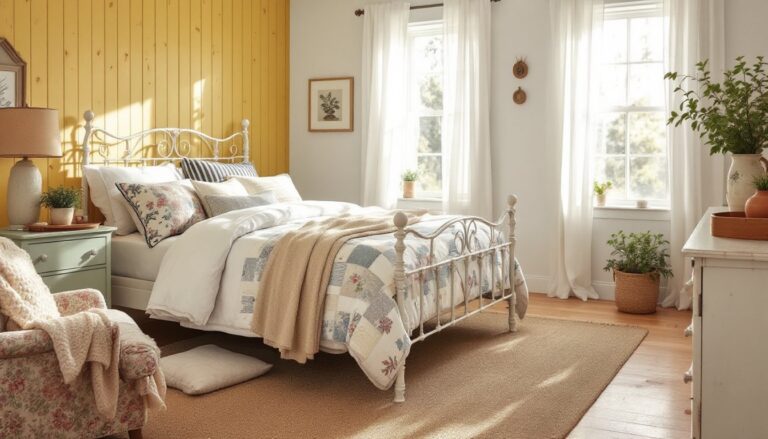
Bed frames: Iron or wood frames with visible detailing work best. Look for full or queen sizes (54×75″ or 60×80″), kings (76×80″) often overpower smaller cottage bedrooms. Antique iron frames can be sandblasted and repainted with Rust-Oleum hammered finish spray paint for a refreshed look without losing patina.
Dressers and nightstands: Vintage cottage bedroom ideas often feature painted wood pieces. A solid wood dresser (dovetail joints, not stapled particleboard) can be stripped with Citristrip (a low-odor chemical stripper) and repainted in chalk or milk paint for a matte, aged finish. Sand lightly with 220-grit paper between coats.
For small bedrooms, consider bedroom decor design strategies that maximize vertical space with tall, narrow dressers rather than wide, low ones.
Seating: A small upholstered chair or wooden bench at the foot of the bed adds function without crowding. Measure clearance, 36 inches of walkway around the bed is the IRC-recommended minimum for safety and accessibility.
Avoid:
- Laminate or veneer furniture that can’t be refinished.
- Oversized pieces that block windows or crowd doorways.
- Matchy-matchy suites. Cottage style thrives on intentional mismatch.
If buying vintage, check for solid joinery and structural integrity. Wobbly legs or split drawer bottoms are fixable with wood glue and clamps, but warped frames or active insect damage aren’t worth the effort.
Textiles and Bedding That Bring Warmth and Texture
Textiles do the heavy lifting in cottage bedrooms, they soften hard surfaces, add insulation, and layer in pattern and color.
Bedding basics:
- Quilts over comforters: Cotton patchwork or whole-cloth quilts feel more authentic than puffy duvets. Layer a quilt over a lightweight cotton blanket for adjustable warmth.
- Linen or cotton sheets: Skip synthetic blends. 100% cotton percale (200+ thread count) or linen offers breathability and that rumpled, lived-in texture. Linen wrinkles are a feature, not a flaw.
- Layering: Start with a fitted sheet, flat sheet, cotton blanket, quilt, and a throw at the foot of the bed. Use 3–5 pillows in varying sizes, standard, Euro, and lumbar, in complementary patterns (florals, ticking stripes, gingham).
Window treatments: Avoid heavy drapes. Instead, use white or natural linen curtains hung on simple wooden or wrought-iron rods. For privacy, layer with matchstick blinds or café curtains on the lower half of the window.
Rugs: Natural fiber rugs (jute, sisal, braided cotton) anchor the space and add warmth underfoot. A 5×7-foot or 8×10-foot rug (depending on room size) should extend at least 18 inches beyond each side of the bed.
Avoid:
- Synthetic fleece or shiny sateen, both read too modern.
- Overly coordinated bedding sets. Mix patterns in the same color family instead.
Wash vintage linens and quilts gently. Use cold water, mild detergent, and line-dry to prevent shrinkage and fiber damage. For stains on antique textiles, consult a textile conservator rather than risking bleach or harsh chemicals.
Decorative Accents and Finishing Touches
Cottage bedrooms rely on curated, functional decor, not tchotchkes.
Wall decor:
- Framed botanical prints or vintage maps: Use simple wood frames (unfinished pine or painted white). Hang at 57–60 inches on center (standard gallery height).
- Open shelving: Install 1×6-inch pine shelves with L-brackets to display small plants, books, or ceramics. Paint or stain to match trim.
- Mirrors: Vintage wood-framed or distressed mirrors reflect light and make small rooms feel larger. Hang opposite windows for maximum effect.
Surface styling:
- Nightstands: A small lamp, a dish for jewelry, and a single book or plant. That’s it.
- Dressers: A tray for organizing small items, a framed photo, or a vintage pitcher with fresh flowers.
Plants: Real greenery softens hard edges. Low-light options like pothos, snake plants, or peace lilies work well in bedrooms with limited natural light. Use ceramic or terracotta pots, nothing plastic.
Many contemporary spaces benefit from thoughtful interior design ideas that balance personal style with practical function.
Avoid:
- Word art, faux distressed signs, or overly themed decor.
- Clutter. Cottage style is simple, not crowded.
- Chrome or brushed nickel hardware. Swap for oil-rubbed bronze, matte black, or porcelain knobs.
When sourcing vintage accents, check estate sales, architectural salvage yards, and online marketplaces. Authentic pieces (even imperfect ones) carry more character than mass-produced “farmhouse” decor.
Lighting Ideas to Create a Soft, Inviting Ambiance
Lighting in a cottage bedroom should be layered, warm, and adjustable. Overhead fixtures alone create harsh shadows and don’t suit the style.
Overhead lighting:
- Flush-mount or semi-flush fixtures: Choose designs with frosted glass shades or fabric drums. Avoid modern pendants or industrial cages.
- Bulb choice: Use 2700K warm white LEDs (60-watt equivalent) to mimic incandescent warmth. Cool-toned LEDs (3000K+) feel too clinical.
Task lighting:
- Table lamps: Ceramic, glass, or wood bases with fabric shades. Place on nightstands with 3-way bulbs (50/100/150 watts equivalent) for adjustable brightness.
- Reading sconces: Wall-mounted swing-arm lamps save nightstand space. Install 16–20 inches above mattress height for comfortable reading. This requires running wire through the wall, if you’re not comfortable with basic electrical work, hire a licensed electrician. Check local codes: bedroom circuits typically require AFCI protection (NEC 210.12).
Ambient lighting:
- String lights or small lanterns: Battery-operated LED string lights (warm white, not multicolor) add soft glow without hard-wiring. Drape over a headboard or along open shelving.
Creating cozy, well-lit spaces often involves combining modern home decor techniques with classic cottage warmth.
Dimmer switches: Install dimmers on overhead fixtures for adjustable light levels. Use a 600-watt or 150-watt LED-compatible dimmer depending on total fixture wattage. Wiring a dimmer is straightforward, turn off the breaker, remove the old switch, connect hot wires (typically black) to the dimmer terminals, and secure ground wires. If you’re unsure, hire an electrician.
Avoid:
- Track lighting or recessed cans, too modern.
- Cool white or daylight bulbs.
- Single-source lighting that casts harsh shadows.
For vintage or antique lamps, inspect cords for fraying or cracking. Rewire with 18-gauge lamp cord and a polarized plug, it’s a simple DIY that prevents fire hazards.
Conclusion
Building a cottage bedroom is less about chasing a look and more about making intentional choices with materials, scale, and detail. Start with paint and textiles, those changes don’t require permits or specialized tools. Layer in vintage or refinished furniture as you find pieces that fit your space and budget. Prioritize quality over quantity, and remember that imperfection is part of the aesthetic. The result should feel collected, comfortable, and entirely yours.