IKEA has built its reputation on making functional furniture fit into spaces that seem impossibly small. When it comes to kitchens, that philosophy pays off in spades. A compact kitchen doesn’t have to mean compromising on storage, workflow, or style, it just means getting smarter about every square inch. Whether someone’s working with a galley layout in a city apartment or carving out a cooking zone in an open-plan studio, IKEA’s modular cabinet systems, adjustable shelving, and clever accessories turn constraints into opportunities. This guide walks through 15 practical ideas for designing, organizing, and upgrading a small IKEA kitchen without very costly or the building code.
Table of Contents
ToggleKey Takeaways
- IKEA’s modular cabinet systems like SEKTION and METOD, built on a 32mm grid standard, allow compact kitchens to maximize storage without custom modifications or wasted space.
- Vertical storage using KUNGSFORS steel rails and wall-mounted cabinets transforms small spaces by capturing unused wall volume that traditional kitchens typically waste.
- Smart organization inserts like MAXIMERA drawers and VARIERA pull-out organizers, paired with corner carousels, double access to storage and eliminate hard-to-reach dead zones.
- Light-colored cabinets, glass-front doors, and under-cabinet LED strips create the visual illusion of a larger kitchen while improving functionality and lighting.
- Budget-friendly upgrades—such as swapping hardware, adding peel-and-stick backsplash, or installing portable islands—deliver significant style improvements to small IKEA kitchens without costly renovation.
- Professional installation is essential for load-bearing wall modifications, electrical work, and plumbing changes; always obtain proper permits and hire licensed contractors to meet building codes.
Why IKEA is Perfect for Small Kitchen Designs
IKEA’s cabinet lines, SEKTION, METOD (in some markets), and accessory systems like KUNGSFORS and SUNNERSTA, are engineered around a 32mm grid standard, the same dimensioning used by most European cabinetmakers. That means units stack, nest, and align without custom shimming or filler panels eating up precious inches.
Cabinet widths start at 12 inches (actual dimension, not nominal), so even a narrow wall between a window and doorway can hold a pantry tower. Base cabinets come in 15-inch and 18-inch depths, letting someone tuck functional storage into spots where standard 24-inch cabinets won’t fit. High cabinets run all the way to 90 inches tall, capturing vertical volume that most kitchens waste.
Beyond dimensions, IKEA’s open-source approach to hardware means third-party organizers, lighting kits, and drawer inserts are widely available. If a homeowner wants to swap out standard soft-close hinges for push-to-open mechanisms or add pull-out pantry racks, the parts are cross-compatible and well-documented. That modularity is a lifesaver during phased renovations or when budgets are tight.
One caveat: IKEA cabinets use frameless (European-style) construction. There’s no face frame, so hinge placement and door reveal are different from traditional American cabinets. Installers used to face-frame boxes need to adjust their scribing and leveling workflow. If the install involves load-bearing wall removal or relocating plumbing, a licensed contractor and building permit are non-negotiable, regardless of cabinet brand.
Smart Storage Solutions for Compact IKEA Kitchens
Vertical Storage and Wall-Mounted Systems
KUNGSFORS steel rail and accessories are the backbone of vertical utility. A single 22-inch rail holds magnetic knife strips, S-hooks for utensils, or wire baskets for spices, all without drilling multiple holes. Mount rails to studs using the included screws (typically #8 x 2-inch wood screws for drywall anchors aren’t load-rated for swinging pots). Spacing rails 16 inches on center aligns with standard stud framing and keeps heavy items secure.
SUNNERSTA is the ultra-budget option: a tension rod system that spans a window recess or corner. It’s rated for light loads, dish towels, small jars, not cast iron. But for renters or temporary setups, it’s removable without patching drywall.
For wall-mounted cabinets, METOD/SEKTION high cabinets can be hung at custom heights. Installing the top of a cabinet 84 inches above finished floor (AFF) instead of the standard 90 inches creates a display ledge or soffit that hides ductwork. Always fasten wall cabinets to studs or use toggle bolts rated for at least 50 pounds per anchor when studs aren’t available. Wall cabinets filled with dishes or canned goods can exceed 100 pounds, and drywall alone won’t hold that load.
Cabinet and Drawer Organization Hacks
IKEA’s MAXIMERA drawer system uses dovetail joints and under-mount soft-close slides rated for 55 pounds per drawer. For small kitchens, replacing one deep drawer with two shallow ones (using stacked MAXIMERA inserts) doubles access to items that otherwise pile up and get forgotten.
VARIERA pot lids, plate organizers, and utensil trays are made from molded plastic and sized to fit SEKTION base cabinets without wasted gaps. A 12-inch-wide base cabinet can hold a VARIERA pull-out trash bin plus a narrow spice rack on the door, no custom carpentry needed.
Pull-out pantry units like UTRUSTA wire baskets turn a 15-inch-wide cabinet into a vertical larder. Install them in the dead zone beside a fridge or range where standard shelves are too deep to reach. The wire baskets allow air circulation, which is a practical benefit for storing onions, potatoes, or bread without mold issues.
Inside corner cabinets, lazy Susans or LeMans-style swing-out trays (available from third-party suppliers compatible with IKEA drilling patterns) recover the 40–60% of volume typically lost to awkward geometry. Check the cabinet’s interior dimensions before ordering, some corner units have center posts or structural bracing that limits turntable diameter.
Space-Saving Layout Ideas Using IKEA Cabinets
Galley kitchens work well when one wall holds sink and cooktop (the work triangle) and the opposite wall houses the fridge and pantry storage. IKEA’s 15-inch-deep upper cabinets can go on the narrow side to maintain a 42-inch minimum clearance between cabinet faces, meeting accessibility guidelines and allowing two people to pass.
For L-shaped layouts, place the sink in the corner using a corner sink base (IKEA offers a dedicated unit with offset drain plumbing). This frees up contiguous counter space on both legs of the L. Pair it with a corner wall cabinet fitted with a carousel to keep upper storage accessible.
Single-wall kitchens benefit from stacking high cabinets floor-to-ceiling. A 24-inch-wide high cabinet can combine a microwave niche, pull-out pantry, and base storage in one vertical column, leaving the rest of the wall open for a cooktop and prep counter. IKEA’s METOD/SEKTION oven housing fits most standard 24-inch or 30-inch single wall ovens, and the cabinet carcass is rated for the weight (check the oven’s specs, some commercial-grade or steam ovens exceed cabinet load limits).
Island or peninsula? In kitchens under 100 square feet, a peninsula anchored to a wall often makes more sense. It defines the work zone without blocking sightlines and can hide plumbing or electrical from an awkward soffit. IKEA base cabinets work as peninsula bodies: add a countertop overhang of 12 inches on the dining side for barstool seating, supported by corbels or brackets every 24 inches to prevent sag. For anyone curious about organizing the rest of the home efficiently, many of these strategies overlap with broader kitchen organizing ideas that work in any size space.
If the layout includes a structural beam or load-bearing wall, consult a structural engineer before removal. Moving or cutting into those elements typically requires a permit and temporary shoring. Non-structural partition walls (often 2×4 framing with drywall) can usually be relocated by a competent DIYer, but check local codes, some jurisdictions require permits for any wall work.
Color and Design Tricks to Make Your Small IKEA Kitchen Feel Larger
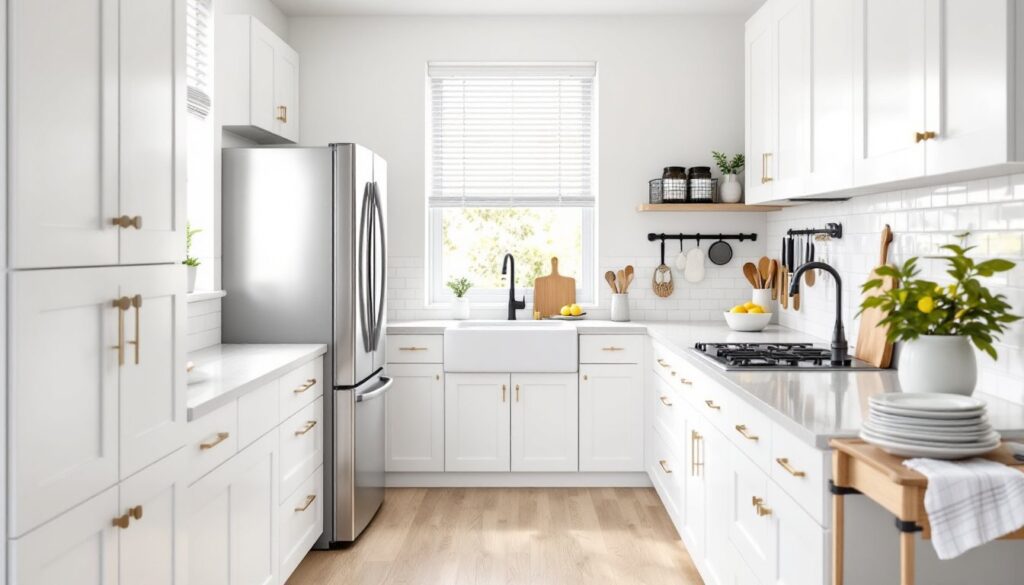
Light-colored cabinets reflect ambient and task lighting, which makes the space feel airier. IKEA’s white, off-white, and light gray door fronts (like VOXTORP high-gloss white or BODBYN off-white) are perennial choices. High-gloss finishes bounce more light than matte, but they also show fingerprints, wipe them down with a microfiber cloth and pH-neutral cleaner to avoid streaking.
Glass-front cabinets (BODBYN, LERHYTTAN) add visual depth without the weight of solid doors. Install them on upper cabinets flanking a window or range hood to create symmetry. Back the interior with peel-and-stick mirror film or a contrasting paint color for extra punch. Keep contents tidy: messy shelves defeat the purpose.
Handleless cabinets with integrated push-to-open mechanisms (IKEA’s UTRUSTA system) eliminate visual clutter. The clean door face reads as a continuous surface, which tricks the eye into perceiving more square footage. Push-to-open requires firm, even pressure: it’s not ideal for cabinets installed above a dishwasher or washing machine, where vibration can pop doors open. For further inspiration on small-space design, enthusiasts often share creative mods on IKEA Hackers, where budget-conscious DIYers push modular furniture into unexpected forms.
Countertop choice matters. Light-colored laminate or quartz in 12-inch or 15-inch overhangs creates a floating effect, especially when paired with under-cabinet LED strips. IKEA’s LILLTRASK wood countertop in birch or oak adds warmth but requires annual oiling (use food-safe mineral oil or beeswax blend) to prevent water damage.
Flooring should run the same direction as the longest sightline. In a galley kitchen, plank flooring installed lengthwise draws the eye and elongates the space. Luxury vinyl plank (LVP) in 6-inch or 8-inch widths mimics hardwood, costs less, and stands up to water better than laminate. Underlayment with a vapor barrier is code in most regions when installing over concrete slab.
Budget-Friendly IKEA Kitchen Upgrades for Small Spaces
Swapping cabinet hardware is the fastest visual refresh. IKEA’s stock knobs and pulls are functional but generic. Upgrading to brushed brass, matte black, or leather pulls from third-party suppliers (measure the hole spacing, IKEA uses 128mm or 160mm centers for most drawers) costs $3–8 per pull and takes an afternoon with a drill and screwdriver.
Under-cabinet LED strips (IKEA’s OMLOPP or VAXMYRA) connect via low-voltage wiring and plug into a single transformer. A 40-inch strip draws about 5 watts and provides 200 lumens, enough for task lighting over a prep counter. Mount them on the underside front edge of wall cabinets to minimize shadows. Use cable clips every 12 inches to keep wiring tidy: loose cables are a fire hazard near heat sources.
Peel-and-stick backsplash tiles made from PVC or aluminum composite mimic subway tile or geometric patterns. They’re not as durable as ceramic or porcelain, but for renters or short-term upgrades, they install without thinset or grout. Clean the wall with TSP (trisodium phosphate) first to ensure adhesion: grease or soap residue causes tiles to peel.
Replacing a standard sink with an undermount or workstation sink maximizes counter space. IKEA’s HAVSEN apron-front sink in 24-inch or 30-inch widths sits proud of the cabinet face, which means no countertop seam along the front edge, a cleaner look and one less place for water to seep in. It requires a dedicated sink base (IKEA sells them), and installation involves silicone caulk, clips, and possibly shimming if the sink is heavy fireclay or cast iron. For small-space dwellers who want more comprehensive strategies, many of the same principles appear in guides from Apartment Therapy, which specializes in compact and rental-friendly makeovers.
Faucets with pull-down spray heads offer more reach in a compact sink. IKEA’s ÄLMAREN and YTTRAN models have ceramic disc cartridges rated for 500,000 cycles, which translates to roughly 10–15 years of daily use. If local water is hard, install an inline filter to prevent mineral buildup in the aerator.
Open shelving can replace one or two upper cabinets, cutting material cost and adding display space. Galvanized steel or solid wood shelves on heavy-duty brackets (rated for 50 pounds per pair) hold everyday dishes. Keep them 12 inches deep maximum so plates don’t overhang. For a polished look, many homeowners turn to resources like The Kitchn for styling tips that balance function and aesthetics in tight quarters. Mount brackets to studs or use toggle anchors: drywall screws alone will fail under load.
Finally, adding a portable kitchen island or cart (IKEA’s VADHOLMA, TORNVIKEN, or RASKOG) injects extra counter and storage without permanent construction. Carts on locking casters can roll out for prep work and tuck away when not in use. A butcher-block top doubles as a cutting surface, though it needs the same oiling maintenance as a butcher-block countertop.
All electrical work, adding outlets for under-cabinet lighting, relocating a range circuit, or installing a hardwired hood, must meet NEC (National Electrical Code) standards. Most jurisdictions require a licensed electrician and permit for anything beyond replacing a fixture on an existing box. Don’t skip this step: insurance claims can be denied if unpermitted work causes a fire.