A spacious bedroom sounds like a luxury, until you’re staring at awkward empty corners, a bed that feels lost in the middle, and zero idea how to make the room feel intentional. Large bedrooms can actually be harder to furnish than small ones. Without a clear plan, they end up looking sparse, echoey, or just plain off.
The good news? A thoughtful layout transforms that extra square footage into a genuinely functional, comfortable retreat. It’s not about filling every inch with furniture, it’s about anchoring key pieces, creating purposeful zones, and balancing openness with coziness. This guide walks through practical strategies to make a huge bedroom feel designed, not accidental.
Table of Contents
ToggleKey Takeaways
- Large bedroom layout ideas work best when you define distinct functional zones—sleeping, dressing, and relaxation areas—to transform empty space into purposeful rooms rather than sparse ballrooms.
- Position your bed as the visual anchor by either floating it a few feet from the wall for symmetry or centering it on a feature wall, ensuring at least 24 to 36 inches of clearance around all sides for movement and intentional spacing.
- Use area rugs strategically to ground furniture groupings; the bed rug should extend 18 to 24 inches beyond the sides and foot of a king bed (typically an 8×10 or 9×12 size) to prevent floating furniture from looking disconnected.
- Incorporate seating areas, reading nooks, or multipurpose furniture like storage ottomans to fill visual space while adding genuine function without overcrowding the floor.
- Balance empty space with vertical design elements—tall dressers, floor-to-ceiling bookshelves, large-scale artwork, and layered lighting—to anchor the room and make high ceilings feel proportionate.
- Embrace negative space and avoid over-accessorizing; a few well-chosen pieces and thoughtful furniture placement create a composed, breathable bedroom that feels both spacious and intentional.
Why Large Bedrooms Need Thoughtful Layouts
Big bedrooms without a plan tend to highlight their emptiness rather than their potential. A king bed shoved against one wall with six feet of dead space behind it doesn’t feel luxurious, it feels unfinished. Large spaces need structure to avoid that “hotel ballroom” vibe.
The challenge is twofold: visual balance and functional zoning. Balance means distributing furniture and visual weight so no single wall or corner dominates. Zoning means carving out distinct areas, sleeping, dressing, relaxing, so the room serves multiple purposes without feeling cluttered.
Without these, even expensive furniture can look haphazard. A layout anchors the design, giving each piece a reason to be where it is. It also makes the room feel intentional, which is what separates a well-designed space from one that just has stuff in it.
Another factor: scale. Standard bedroom furniture is sized for 10×12 or 12×14 rooms. In a 16×20 or larger bedroom, a single nightstand and dresser will look toylike. Larger layouts demand appropriately scaled pieces or additional furnishings to fill the visual field without overcrowding the floor.
Create Defined Zones for Multiple Functions
One of the best ways to handle a huge bedroom is to stop treating it like just a bedroom. Break it into functional zones: a primary sleeping area, a dressing or closet zone, and a secondary activity space like a reading corner, workspace, or lounge.
Start by mapping out where each zone makes sense based on natural light, electrical outlets, and traffic flow. The sleeping zone typically anchors the room, more on placement below, but secondary zones should feel separate without requiring walls.
Use furniture as dividers. A bookcase, console table, or even a low credenza can define the boundary between sleeping and sitting areas. In rooms with high ceilings, a decorative folding screen or open shelving unit works without blocking light or making the space feel cramped.
If the bedroom includes an ensuite bathroom or walk-in closet, position the dressing zone near that access point. A bench, full-length mirror, and valet stand create a mini getting-ready station that keeps clothes and accessories out of the main sleeping area.
For homeowners exploring home design inspiration, zoning large bedrooms into multipurpose layouts is a common thread in modern interiors. The key is making each zone feel purposeful, not just an afterthought to fill space.
Furniture Placement Strategies That Anchor the Space
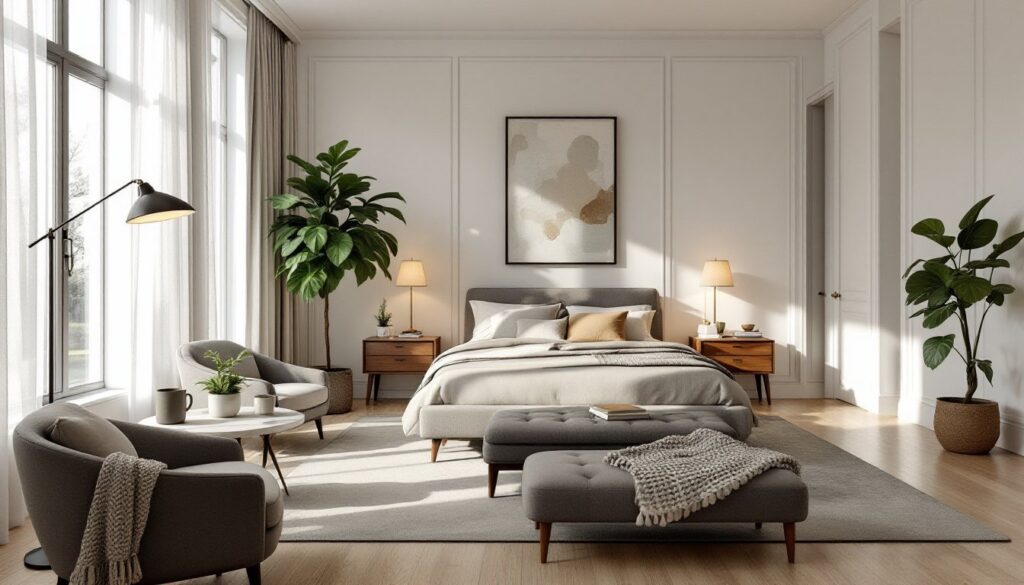
The bed is the room’s visual anchor, and its placement sets the tone for everything else. In a large bedroom layout, centering the bed on the longest wall, or floating it in the middle of the room, often works better than pushing it into a corner.
Floating the bed (pulling it several feet away from the wall) creates symmetry and allows for nightstands on both sides, plus space to walk around. This works especially well in rooms 14 feet wide or larger. You can place a console table or low bench behind the headboard to visually “back” the bed and add surface area for lamps or decor.
If floating feels too exposed, center the bed on a feature wall, ideally one without windows or doors interrupting the sightline. Flank it with matching nightstands and lamps to create symmetry. In rooms with off-center windows, adjust placement so the bed balances the architecture rather than fighting it.
Avoid pushing large furniture flat against walls in every direction. This creates a perimeter of stuff with a dead zone in the middle. Instead, pull dressers, armoires, or seating a foot or two away from the wall. It sounds counterintuitive, but it makes the room feel more cohesive and intentional.
Leave at least 24 to 36 inches of clearance around the bed for easy movement. In a huge bedroom, you can go wider, 48 inches or more, without sacrificing function. That extra space prevents the bed from looking like it’s floating in a void.
Incorporate a Seating Area or Reading Nook
A seating area is one of the most effective ways to fill space while adding genuine function. It transforms the bedroom from just a place to sleep into a retreat for reading, morning coffee, or winding down without climbing into bed.
Placement matters. Position seating near a window to take advantage of natural light, or tuck it into an alcove or corner that would otherwise go unused. If the room has a fireplace, build the seating zone around that focal point.
For a minimal setup, two upholstered armchairs with a small side table and floor lamp create a cozy reading nook. If space allows, a loveseat or small sofa works, especially in rooms over 400 square feet. Add a throw blanket and a few pillows to make it feel finished.
A bench at the foot of the bed can double as casual seating and a place to toss clothes or fold laundry. Choose one with storage underneath if the room lacks sufficient closet space. Tufted or upholstered benches add softness, while wood or metal frames keep the look cleaner.
Many apartment and home decor ideas emphasize multifunctional furniture, which is just as relevant in large bedrooms. A storage ottoman, for instance, provides seating and hides extra bedding or off-season clothes.
If a full seating area feels like overkill, even a single accent chair with a small side table and reading lamp can break up empty space and make the room more inviting.
Use Area Rugs to Define Different Sections
Area rugs are one of the simplest, most effective tools for defining zones in a large bedroom layout. They visually ground furniture groupings and add warmth without permanent changes, ideal for renters or anyone testing a layout before committing.
Sizing is critical. For the bed area, the rug should extend at least 18 to 24 inches beyond the sides and foot of the bed. A too-small rug makes the bed look like it’s floating on a postage stamp. For a king bed, that typically means an 8×10 or 9×12 rug. In extra-large rooms, a 10×14 isn’t overkill.
If the room includes a seating area, use a second rug to define that zone. It doesn’t need to match the primary rug, but it should coordinate in color or texture. Place it so the front legs of chairs or a sofa rest on the rug, anchoring the grouping.
Material affects both function and feel. Wool or wool-blend rugs are durable, soft underfoot, and work in most climates. Natural fiber rugs like jute or sisal add texture but can feel rough, better for under a bench or seating area than directly beside the bed. Synthetic options (polypropylene, nylon) are budget-friendly and stain-resistant, useful in bedrooms with kids or pets.
Layering rugs, placing a smaller, patterned rug over a larger neutral one, adds depth and interest. It’s a design trick borrowed from interior design professionals and homeowners looking to add personality without a full redecorate.
Avoid pushing rugs flat against walls. Leave a few inches of floor exposed around the perimeter: it frames the rug and makes the room feel more intentional.
Design Tips for Balancing Empty Space
Empty space isn’t the enemy, it’s only a problem when it feels accidental. The goal isn’t to furnish every square foot, but to balance filled and open areas so the room feels composed, not sparse.
Vertical elements help fill visual space without cluttering the floor. Tall dressers, floor-to-ceiling bookshelves, or a canopy bed draw the eye upward and make high ceilings feel proportionate. In rooms with 9-foot or higher ceilings, consider artwork or mirrors hung higher than standard (60 inches on center) to fill the upper wall plane.
Large-scale artwork or a gallery wall behind the bed or seating area adds visual weight without taking up floor space. In huge bedrooms, a single small print looks lost, go bigger, or group multiple pieces.
Lighting layers also balance empty space. A central ceiling fixture alone will leave corners dark and uninviting. Add floor lamps near seating, table lamps on nightstands and dressers, and consider wall sconces or pendant lights to activate vertical space. Dimmer switches let you adjust mood and make the room feel cozier at night.
Greenery works wonders in big rooms. A tall potted plant, fiddle leaf fig, monstera, or dracaena, fills a corner and softens hard edges. Multiple smaller plants on shelves, nightstands, or a dresser add life without clutter.
Avoid over-accessorizing to compensate for space. A few well-chosen pieces, an oversized mirror, a statement light fixture, a sculptural chair, make more impact than a dozen small items scattered around.
Finally, embrace negative space. A large bedroom layout doesn’t need to be packed. Open floor area makes the room feel breathable and allows you to move freely, which is the whole point of having a big room in the first place.
Conclusion
A large bedroom is a blank canvas, not a design problem. With intentional zoning, smart furniture placement, and a few visual anchors, all that extra space becomes an asset instead of a challenge. Focus on balance over filling every corner, and the room will feel both spacious and purposeful, exactly what a well-designed bedroom should be.