Half bathrooms don’t need to hide in neutral beige. These compact rooms, often just a toilet and sink tucked under a staircase or near an entryway, are ideal candidates for bold design moves. Wallpaper transforms a cramped powder room into a memorable focal point without the commitment or expense of remodeling an entire home. With limited square footage, homeowners can experiment with patterns and colors they’d hesitate to use elsewhere. This guide walks through practical wallpaper powder room ideas that balance visual impact with the unique conditions of a small, often windowless space.
Table of Contents
ToggleKey Takeaways
- Half bathroom wallpaper ideas transform small powder rooms into memorable focal points without expensive renovations, since limited square footage keeps costs between $30–$60 for most projects.
- Vinyl-coated or solid vinyl wallpapers work best in half bathrooms due to lower moisture exposure compared to full bathrooms, making them resistant to mildew and easy to wipe clean.
- Bold geometric patterns, large-scale florals, and metallic accents create visual impact in tight spaces, while larger pattern repeats (12 inches or more) prevent the room from feeling cluttered or dizzying.
- Textured wallpapers like grasscloth and tone-on-tone damasks add sophistication without overwhelming a small space, while peel-and-stick options offer renters and hesitant homeowners a flexible testing ground.
- Proper preparation—filling cracks, priming with acrylic primer, and avoiding textured drywall—is essential before installation, as wallpaper amplifies every wall imperfection and requires careful measurement and cutting.
- Test wallpaper samples in actual bathroom lighting conditions before committing, and coordinate your chosen pattern with existing fixtures to ensure the design complements rather than clashes with the room’s era and style.
Why Wallpaper Works Perfectly in Half Bathrooms
Half baths present a unique design opportunity precisely because they’re small. The limited square footage means wallpaper costs stay reasonable, most powder rooms need just one or two single rolls, ranging from 30 to 60 square feet of coverage depending on ceiling height and door placement.
Unlike full bathrooms with showers, half baths experience lower moisture exposure. Standard vinyl-coated or non-woven wallpapers handle the occasional humidity from handwashing without the mildew concerns of a steamy shower enclosure. That said, skip untreated paper or grasscloth directly above a sink where splashing occurs. Vinyl-coated or solid vinyl wallpapers offer the best moisture resistance and wipe-clean surfaces for high-traffic guest bathrooms.
Powder rooms rarely contain personal belongings or clutter, no toothbrush holders, shampoo bottles, or towel piles, so the walls remain unobstructed. A bold pattern gets full stage without visual competition. This makes wallpaper a smarter investment here than in rooms where furniture and decor dilute the impact.
Many half baths lack natural light, which can make paint feel flat. Reflective or metallic wallpaper patterns bounce artificial light around the room, adding depth. Textured wallpapers create shadow lines that prevent the space from reading as a featureless box.
Bold Patterns That Make a Statement
Geometric and Modern Designs
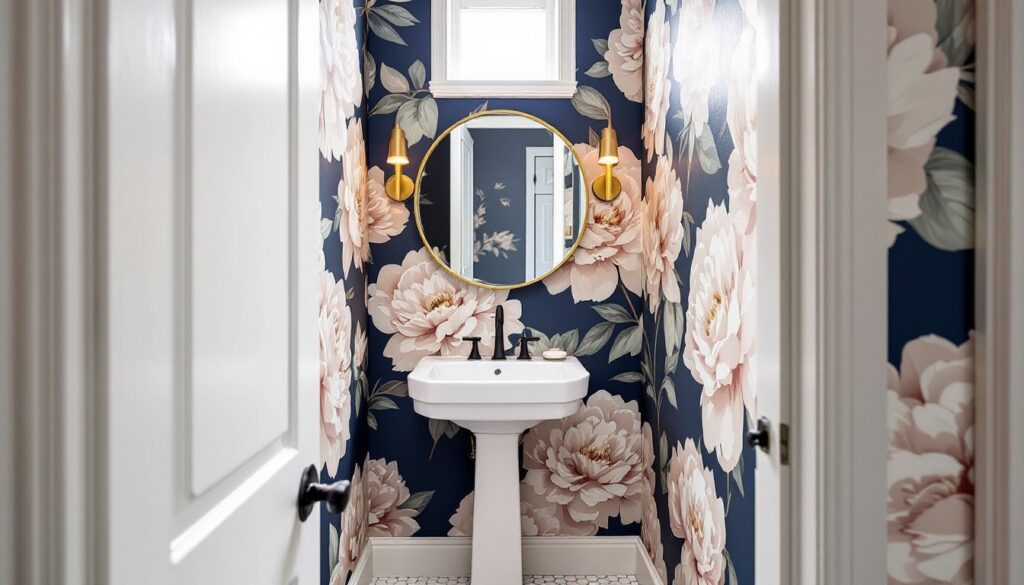
Geometric wallpapers, hexagons, chevrons, or abstract line work, inject energy into a neutral fixture palette. In a 5×4-foot powder room, a black-and-white geometric can feel dramatic without overwhelming, especially when paired with matte black hardware and a floating vanity. Scale matters: larger repeats (12 inches or more) prevent dizziness in tight quarters, while micro-patterns can read as texture from a distance.
Horizontal stripes visually widen narrow half baths, though they’ll emphasize a low ceiling. Vertical stripes do the opposite, useful if the room feels cramped but you’ve got an 8-foot or taller ceiling. Avoid stripes on all four walls: instead, stripe one accent wall (typically the one facing the door) and paint the others in a coordinating solid to avoid a funhouse effect.
Metallic accents in geometric designs catch light and add a layer of sophistication. Gold or brass geometrics pair naturally with warm-toned fixtures and mirrors, while silver or pewter designs suit chrome and cooler palettes. Keep in mind that metallic wallpapers show application flaws, bubbles or misaligned seams, more readily than matte finishes, so factor in extra prep and patience during installation.
Floral and Botanical Prints
Floral wallpapers range from delicate vintage tea-rose patterns to oversized tropical leaves. Large-scale botanicals, think monstera leaves or peonies at 18 to 24 inches across, create a mural effect in a small space, turning the powder room into an experience rather than an afterthought. Dark backgrounds (navy, charcoal, or forest green) make bright florals pop and hide minor wall imperfections better than light grounds.
Traditional chinoiserie or toile patterns suit period homes and classic interiors, especially when the rest of the house leans traditional. These busy, narrative designs work in powder rooms where guests spend just a few minutes, long enough to appreciate detail without visual fatigue. Pair them with simple fixtures and minimal accessories so the wallpaper stays the hero.
Botanical prints fit well into bathrooms that open onto gardens or sunrooms, creating visual continuity. If the half bath sits near a kitchen or mudroom, consider wallpaper with herb or vegetable motifs for a cohesive flow. Sites like Houzz showcase thousands of examples showing how homeowners pair wallpaper patterns with tile, paint, and fixture choices.
Subtle and Sophisticated Wallpaper Choices
Not every powder room needs to shout. Textured wallpapers, grasscloth, linen weaves, or faux plaster finishes, add tactile interest without pattern. Grasscloth in particular brings warmth and an organic feel, though it’s not scrubbable: reserve it for adult-only or low-traffic half baths. If durability matters, look for vinyl grasscloth imitations that mimic the texture but tolerate moisture and cleaning.
Tone-on-tone damasks or subtle stripes offer depth without competing with statement fixtures or artwork. A pale gray damask on a slightly darker gray background creates shadow and dimension that flat paint can’t match. These work especially well in homes with open floor plans where the powder room should complement rather than contrast with adjacent living spaces.
Neutral geometric wallpapers, grays, taupes, soft whites, provide structure without color commitment. A cream-on-white trellis pattern adds architectural interest and pairs with virtually any accent color in towels or art. For a polished look, match the wallpaper’s undertones (warm or cool) to the home’s existing palette.
Consider peel-and-stick wallpaper for renters or anyone hesitant about commitment. Quality peel-and-stick options now rival traditional wallpaper in appearance and come in hundreds of patterns. They install faster, forgive minor mistakes (you can reposition within seconds of application), and remove cleanly, ideal for testing bold ideas before committing to permanent wallpaper. Inspiration galleries on Homify demonstrate how subtle wallpaper choices layer into broader design schemes across different architectural styles.
Tips for Choosing the Right Wallpaper for Your Half Bath
Start by assessing moisture exposure. If the sink sits against an exterior wall in a cold climate, condensation can occur. In those cases, stick with solid vinyl or heavy vinyl-coated papers rated for bathroom use. Avoid untreated paper, fabric-backed paper, or natural fibers in high-moisture zones.
Measure carefully. Powder rooms often have odd angles, soffits, or built-in niches that complicate pattern matching. Order 10–15% extra to account for waste, especially with large repeats (patterns that repeat every 24 inches or more require more material to align properly). A typical half bath uses 40 to 60 square feet of wall coverage, so one double roll often suffices for a simple rectangular room, but complex layouts may need two.
Test samples in the actual space before committing. Wallpaper looks different under the bathroom’s artificial lighting than it does under showroom fluorescents. Most retailers sell sample sheets (12×12 inches or larger) for a few dollars. Tape samples to the wall and live with them for a few days, checking appearance under different lighting conditions and times of day.
Consider the ceiling. In a very small powder room, wrapping wallpaper onto the ceiling can create a jewel-box effect, enveloping and intentional rather than cramped. Paint the ceiling in a shade pulled from the wallpaper to tie the space together without the complexity of ceiling application.
Match the wallpaper style to your fixtures. Modern geometric patterns clash with ornate Victorian pedestal sinks, while delicate florals look out of place against industrial concrete sinks. If you’re keeping existing fixtures, choose wallpaper that complements their era and finish. If you’re updating everything, pick wallpaper first, it’s harder to match later, and select fixtures that harmonize.
Installation and Maintenance Considerations
Prep is non-negotiable. Wallpaper amplifies every wall flaw. Fill nail holes and cracks with lightweight spackle, sand smooth with 120-grit paper, and prime with a high-quality acrylic primer designed for wallpaper. Primer seals the surface, evens porosity, and makes future removal easier. If the walls were previously painted with flat or eggshell paint, primer is essential, wallpaper paste won’t adhere reliably to low-sheen paints without it.
Skip wallpaper over textured drywall (orange peel or knockdown finishes) unless you’re willing to skim-coat first. Texture telegraphs through wallpaper and prevents proper adhesion. Skim-coating, applying a thin layer of joint compound over the entire wall and sanding it smooth, is tedious but necessary for a professional result. Alternatively, choose a heavily textured wallpaper that camouflages minor imperfections.
For traditional paste-the-wall wallpaper, a 4-inch putty knife and smoothing brush help eliminate bubbles. Work from the center outward, pressing firmly. Pre-pasted papers require a water tray and careful timing, too little soaking and the paste won’t activate: too much and the paper turns to mush. Non-woven wallpapers (paste-the-wall type) are the most forgiving for DIYers: you apply paste directly to the wall with a roller, then hang dry strips. They don’t stretch or tear as easily as traditional paper.
Cutting around outlets, switches, and tight corners takes patience. Turn off power at the breaker before trimming around electrical boxes. Use a sharp utility knife with a fresh blade, dull blades tear paper. For inside corners, slightly overlap the seam and cut through both layers with a straightedge to create a perfect butt joint.
Maintenance is minimal for vinyl-coated wallpapers. Wipe splashes immediately with a damp cloth. Avoid abrasive cleaners or scrub brushes, which can damage the finish. If a seam lifts over time, a small syringe of wallpaper adhesive (available at any hardware store) and a seam roller will re-secure it. Examples like this DIY vanity project show how wallpaper integrates with other DIY elements to complete a cohesive powder room transformation.
Safety note: Always ventilate well when working with wallpaper paste or removers, open windows and run a fan. Wear nitrile gloves to protect skin from prolonged contact with adhesives. If you’re removing old wallpaper first, a respirator mask (N95 or better) is smart, especially in older homes where lead paint or mold may hide beneath old paper.