First-floor apartment patios offer a rare perk: direct outdoor access without the hassle of hauling gear up flights of stairs. But they also come with challenges, passerby foot traffic, lack of privacy, and limited square footage can make that concrete slab feel more exposed than inviting. The good news? With smart design choices and a few strategic upgrades, renters and owners alike can turn even the most basic ground-level patio into a functional, private retreat. This guide walks through practical solutions for privacy screens, space-maximizing furniture, vertical gardens, lighting, weather-resistant materials, and budget-friendly DIY projects that won’t require a landlord’s permission or a contractor’s invoice.
Table of Contents
ToggleKey Takeaways
- First-floor apartment patio ideas focus on privacy, space maximization, and reversible installations that don’t require landlord permission or permanent modifications.
- Lattice panels, outdoor curtains, and freestanding privacy screens are renter-friendly solutions that transform ground-level patios into private retreats without sacrificing style.
- Smart furniture choices like folding bistro sets, stackable resin wicker chairs, and modular seating maximize space while maintaining flexibility for different activities and occasions.
- Vertical gardens and wall-mounted planters double as natural privacy screens while maximizing greenery without consuming precious floor space on first-floor patios.
- Layered lighting combining string lights, solar path lights, LED strips, and motion-sensor floodlights extends usability after sunset and improves security on ground-level spaces.
- Budget-friendly DIY projects like painted concrete floors, pallet furniture, and stenciled privacy screens upgrade basic patios for $15–$60 using weather-resistant materials.
Create Privacy Without Sacrificing Style
Ground-level patios face the street, sidewalk, or courtyard, meaning privacy is often the first hurdle. Solid solutions include lattice panels, outdoor curtains, and privacy screens, all renter-friendly if installed with weighted bases or tension rods.
Lattice panels (typically sold in 4′ × 8′ sheets at home centers) can be secured to freestanding frames built from 2×4 pressure-treated lumber. Paint or stain them to match your aesthetic, then plant climbing vines like clematis or jasmine for a living privacy wall. For instant coverage, attach the lattice to a planter box filled with tall grasses or bamboo.
Outdoor curtains made from fade-resistant polyester or Sunbrella fabric offer flexibility, draw them for privacy during morning coffee, tie them back when you want airflow. Mount them on a tension rod spanning the patio opening, or use ceiling hooks if your lease allows. Look for grommeted panels rated for outdoor use: indoor curtains will fade and mildew within a season.
Freestanding privacy screens, such as bamboo roll-up shades or laser-cut metal panels, require no installation and can be repositioned as needed. Anchor them with sandbags or planter boxes to prevent tipping in wind. For a modern look, corrugated metal sheets (available at metal suppliers in 3′ × 6′ panels) can be framed in cedar or aluminum and weighted at the base. Just ensure any metal edges are filed smooth to avoid cuts.
Maximize Space with Smart Furniture Choices
Small patios demand furniture that earns its footprint. Skip bulky sectionals in favor of folding bistro sets, stackable stools, and modular seating that adapts to the occasion.
Folding metal bistro tables (typically 24″–30″ diameter) and chairs can be collapsed and stored vertically against a wall when not in use. Look for powder-coated steel or aluminum frames: they resist rust better than bare metal and weigh less than wrought iron.
Stackable resin wicker chairs offer the look of natural wicker without the rot. Brands using UV-stabilized polyethylene won’t crack or fade as quickly as cheaper polypropylene versions. Stack them three or four high in a corner when you need floor space for a yoga mat or a kiddie pool.
For patios with design constraints similar to small apartment balconies, modular outdoor seating, such as interlocking corner units, lets you reconfigure the layout as needed. A pair of armless chairs can function as a loveseat, then separate for solo seating. Opt for pieces with built-in storage under the seat cushions: they’re ideal for stashing throw pillows, citronella candles, and small gardening tools.
Nesting side tables made from teak or powder-coated aluminum tuck together when not in use and pull out for drinks or potted plants. Avoid glass-top tables on concrete patios, they’re prone to shattering if a planter tips over.
Add Greenery and Vertical Gardens
Vertical gardening is the MVP of first-floor patio design. It maximizes greenery without consuming precious floor space and doubles as a natural privacy screen.
Wall-mounted planters attach to fence slats, railings, or exterior siding (with landlord approval). Galvanized steel or powder-coated aluminum planters resist rust and hold up better than plastic in direct sun. For no-drill installations, use over-the-rail planters or tension rod systems with S-hooks.
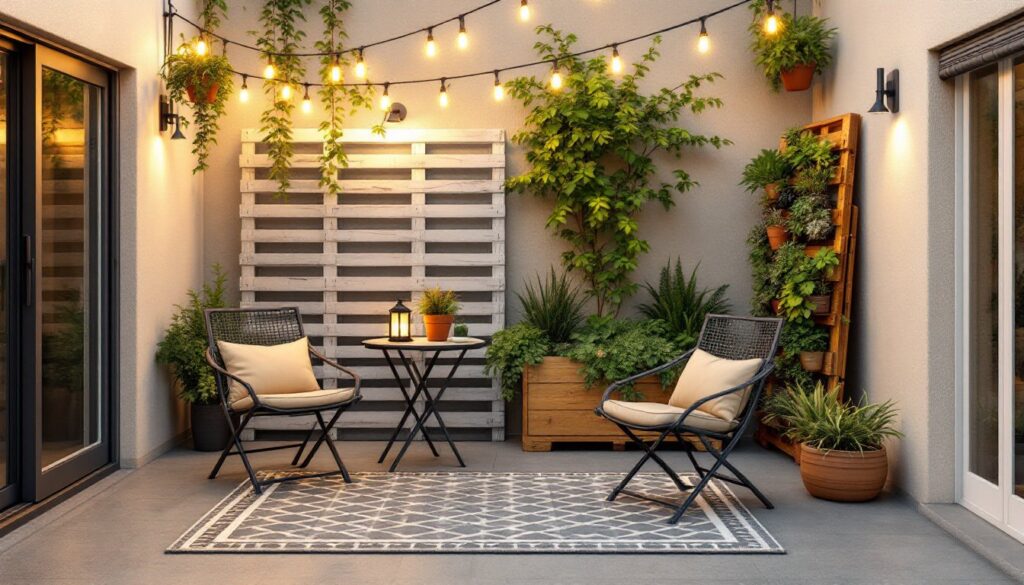
Pallet gardens are a DIY classic: stand a heat-treated wooden pallet (marked HT, not chemically treated MB) upright, line the back with landscape fabric, and fill the slats with potting soil. Plant herbs, succulents, or trailing flowers in each opening. Secure the pallet to a wall with L-brackets or lean it at a 10–15° angle against a solid surface for stability.
Tiered plant stands made from cedar or metal tubing can hold 6–12 pots in a footprint smaller than a single large planter. Arrange them in a corner to create a vertical garden wall. Use a mix of pot sizes, larger containers at the base for structural stability, smaller pots higher up to avoid top-heaviness.
Self-watering planters with built-in reservoirs reduce maintenance and prevent overwatering. They’re especially useful for renters who travel frequently or don’t have access to an outdoor spigot. Fill the reservoir every few days instead of daily watering.
Choose native or drought-tolerant plants to reduce water use and upkeep. For partial shade, try ferns, hostas, or impatiens. Full-sun patios do well with lavender, sedum, or ornamental grasses. If local ordinances allow, install a drip irrigation kit on a timer, quarter-inch tubing runs from a spigot adapter to each pot, controlled by a battery-powered valve.
Lighting Ideas for Ambiance and Safety
Good lighting extends patio use after sunset and improves security. Combine ambient, task, and accent lighting for a layered effect.
String lights (also called café lights or bistro lights) are the easiest ambient solution. Choose LED bulbs in warm white (2700K–3000K) for a softer glow that won’t attract as many insects as cool white. Suspend them overhead using screw-in cup hooks on fascia boards or railings, or run them along a privacy screen frame. Look for weatherproof cords rated for outdoor use (UL or ETL listed). Solar-powered versions eliminate the need for an outlet but require 6–8 hours of sun to charge fully.
Solar path lights staked into planter boxes or along the patio edge provide subtle ground-level illumination. Metal or tempered glass housings outlast plastic. Position them near steps, thresholds, or furniture legs to prevent tripping hazards.
Battery-operated LED lanterns or flameless candles add task lighting for dining without the fire risk of real candles (important in windy conditions or apartments with fire codes). Some models include timers that turn them on automatically at dusk.
For a modern touch, LED strip lights with adhesive backing can line planter edges, privacy screens, or the underside of benches. Choose IP65-rated strips for moisture resistance. Plug them into a smart outlet to control brightness and color via an app.
Motion-sensor floodlights mounted above the patio door improve security and hands-free entry when carrying groceries. Aim for 800–1200 lumens for adequate coverage without blinding neighbors. Adjust the sensitivity and duration settings to avoid false triggers from passing cats or wind-blown branches.
Weather-Resistant Decor and Storage Solutions
First-floor patios take the brunt of rain, sun, and wind. Choose materials built to withstand the elements, and plan for storage that keeps gear dry and organized.
Outdoor rugs made from polypropylene or recycled plastic resist mold and fade less than natural fibers. Hose them off periodically to remove dirt and pollen. Secure corners with outdoor rug tape or non-slip pads to prevent tripping and wind lift.
Throw pillows and cushions should use solution-dyed acrylic fabric (like Sunbrella) with quick-dry foam inserts. Standard polyester fill retains water and breeds mildew. Store cushions in a deck box during heavy rain or winter months.
Deck boxes (also called storage benches) serve double duty as seating and waterproof storage. Look for resin construction with a hinged lid and gas struts for slow-close operation. A 120-gallon box can hold cushions, gardening tools, hoses, and outdoor toys. Avoid wood deck boxes unless they’re made from teak or cedar and sealed with a water-repellent finish.
Wall-mounted hooks or a pegboard system on a privacy screen can hold tools, watering cans, and hanging baskets. Use stainless steel or coated hardware to prevent rust stains on walls or fabric.
For projects involving outdoor materials and finishes, many home design resources recommend sealing wood surfaces annually with a UV-blocking sealant to prevent graying and cracking. Apply with a foam brush or pump sprayer, following grain direction for even coverage.
Budget-Friendly DIY Patio Projects
A few weekend projects can upgrade a basic patio without breaking the lease or the budget.
Painted concrete floors: Clean the slab with a degreaser (like TSP substitute), rinse thoroughly, and let dry for 24 hours. Apply a concrete bonding primer, then two coats of porch and floor paint in a color that hides dirt (grays and taupes work well). Use a textured roller or add anti-slip grit to the final coat for traction. Total cost: $30–$60 for a 100-square-foot patio.
DIY planter boxes: Build simple rectangular planters from untreated cedar fence pickets (actual dimensions: 5.5″ wide × 0.5″ thick) and 2×2 corner posts. Cut boards to length with a miter saw or circular saw, assemble with exterior-grade screws (not nails, they work loose), and line the interior with landscape fabric before filling with soil. A 24″ × 12″ × 12″ box uses about $15 in materials.
Pallet furniture: Heat-treated pallets can become coffee tables, benches, or vertical planters with minimal tools. Sand rough edges with 80-grit sandpaper, then seal with exterior polyurethane or deck stain. Add casters to the bottom of a pallet coffee table for easy repositioning. Stack two pallets and bolt them together for a taller bar-height table.
Macramé plant hangers: Use 3mm cotton cord to knot simple hangers for lightweight pots (under 5 lbs). Tutorials are widely available online. Hang from screw-in ceiling hooks rated for at least 10 lbs to account for soil and water weight.
Stenciled privacy screens: Paint a plain lattice panel or canvas drop cloth with a geometric or botanical stencil using outdoor acrylic paint. Seal with a clear acrylic spray for UV protection. For inspiration on compact outdoor styling, modern apartment designs often feature bold patterns that add visual interest without clutter.
Wear safety glasses when cutting wood, and use a dust mask when sanding or applying spray finishes. Work in a ventilated area and dispose of paint-soaked rags in a water-filled metal can to prevent spontaneous combustion.
Conclusion
First-floor apartment patios don’t need a big budget or permanent modifications to feel like a true outdoor retreat. With privacy screens, space-smart furniture, vertical gardens, layered lighting, and a few DIY upgrades, any ground-level slab can become a functional extension of the living space. Focus on weather-resistant materials, reversible installations, and projects that deliver visible impact without landlord headaches, and enjoy the rare luxury of stepping straight outside.