The entryway is the first room every guest, and you, sees when walking into your home. It’s also the hardest-working square footage in the house, dealing with muddy boots, wet umbrellas, and whatever the outside world drags in. A well-chosen rug doesn’t just protect your floors: it anchors the space, hides dirt between cleanings, and sets the tone for the rest of your home. But picking the right one means balancing durability, size, and style, not just grabbing whatever fits the doorway. This guide walks through the practical decisions that turn a functional floor covering into a design asset that actually lasts.
Table of Contents
ToggleKey Takeaways
- An entryway rug protects your floors from dirt and moisture while visually defining the entry zone and making a strong first impression for home resale value.
- Choose the right size by measuring your entryway and leaving 4″–6″ of exposed floor on each side; ensure door clearance with low-pile rugs under 1/4″ thick to avoid interference.
- Prioritize durable, high-traffic materials like nylon, polypropylene, or wool with low pile; avoid cotton and silk, which stain easily or require expensive maintenance.
- Entryway rug ideas work best when you balance practicality with style—bold patterns hide dirt and add character, while neutral tones offer timeless versatility and work as underlayers.
- Layer a smaller patterned rug over a larger neutral base in spacious entries using rug pads to prevent slipping and create depth without sacrificing safety.
- Durability and function should guide your choice first; style second—a well-maintained, intentional rug beats an expensive piece that’s stained or deteriorating.
Why Your Entryway Rug Matters More Than You Think
An entryway rug is a workhorse disguised as decor. It catches dirt, salt, and moisture before they spread through the house, saving wear on finished floors and cutting down on cleaning time. Homes without a rug in the entry track grit straight onto hardwood, tile, or LVP, accelerating scratches and dulling the finish.
Beyond function, the rug defines the zone. Open-plan homes especially benefit from a rug that visually separates the entry from adjacent living spaces. It tells guests where to pause, drop bags, and kick off shoes without a verbal cue.
From a resale perspective, a cohesive, well-maintained entry makes a strong first impression during showings. It signals that the homeowner pays attention to details. That doesn’t mean expensive, it means intentional. A $70 natural fiber runner in good shape beats a $300 silk rug that’s stained and fraying.
Sizing Your Entryway Rug for Maximum Impact
Rug size matters more than pattern or color. Too small, and it looks like a bath mat. Too large, and it competes with adjacent rooms or blocks door swing.
Measure your entryway dimensions first. For a standard 3′ x 5′ or 3′ x 6′ entry, a 2.5′ x 4′ or 3′ x 5′ rug works well. Leave 4″–6″ of floor exposed on each side to frame the rug and prevent it from looking wall-to-wall.
Check door clearance. Interior doors typically require 1/2″–3/4″ clearance above the finished floor. A low-pile rug (under 1/4″ thick) won’t interfere, but high-pile or shag styles might catch. Test the door swing before committing to thickness.
Consider furniture placement. If you have a console table or bench, the rug should extend at least 12″–18″ beyond the furniture’s front legs. This anchors the piece visually and keeps it from looking like it’s floating.
For wide or L-shaped entries, layering a runner (2.5′ x 8′ or longer) over a larger neutral rug creates depth without custom sizing. More on that later.
Durable Materials That Stand Up to Heavy Traffic
Entryways need rugs that tolerate abuse. Skip anything labeled “dry clean only” or “indoor use in low-traffic areas.” Focus on materials rated for high traffic and easy cleaning.
Polypropylene (olefin): Synthetic, stain-resistant, and budget-friendly. Handles moisture well, dries fast, and resists mold, ideal for wet climates. Lacks the softness of natural fibers but cleans with a hose and mild detergent. Expect 3–5 years of heavy use before pile starts matting.
Nylon: The most durable synthetic. Resists crushing better than polypropylene and holds dye well. Slightly pricier but worth it for homes with kids, pets, or daily foot traffic. Look for solution-dyed nylon for fade resistance.
Wool: Natural, resilient, and naturally stain-resistant thanks to lanolin. A wool rug with a low pile (under 1/2″) will last 10+ years in an entryway. Vacuum weekly and spot-clean spills immediately with cold water and wool-safe cleaner. Avoid in very humid areas, wool holds moisture and can develop odors if it doesn’t dry fully.
Jute and sisal: These natural fibers are durable but absorb moisture and stain easily. They work in covered entries or dry climates but will degrade quickly in wet conditions. If you love the look, layer a smaller synthetic rug on top for the landing zone.
Outdoor rugs (polyester or polypropylene): Designed for UV and moisture exposure, these stand up to anything. Many home decor experts recommend outdoor rugs for entryways because they’re machine-washable or hose-cleanable. The trade-off: they feel stiffer underfoot and can look less refined up close.
Avoid: Cotton (stains easily, holds moisture), silk (delicate, expensive to clean), and high-pile shag (traps dirt, hard to vacuum).
Design Styles to Match Your Home’s Personality
Once you’ve nailed durability and size, style becomes the fun part. The rug should complement your home’s aesthetic without requiring a full redecorate if you swap it out in a few years.
Bold Patterns and Colors for Statement Entryways
If your entryway is bland, white walls, minimal trim, no architectural detail, a bold rug adds instant character. Geometric patterns, oversized florals, or saturated colors create a focal point and distract from scuffs or wear.
Entryway rug ideas modern often lean on high-contrast patterns: black-and-white chevrons, navy-and-cream stripes, or graphic abstracts. These read as intentional rather than busy, especially in smaller entries where a single strong element makes more impact than multiple small decor pieces.
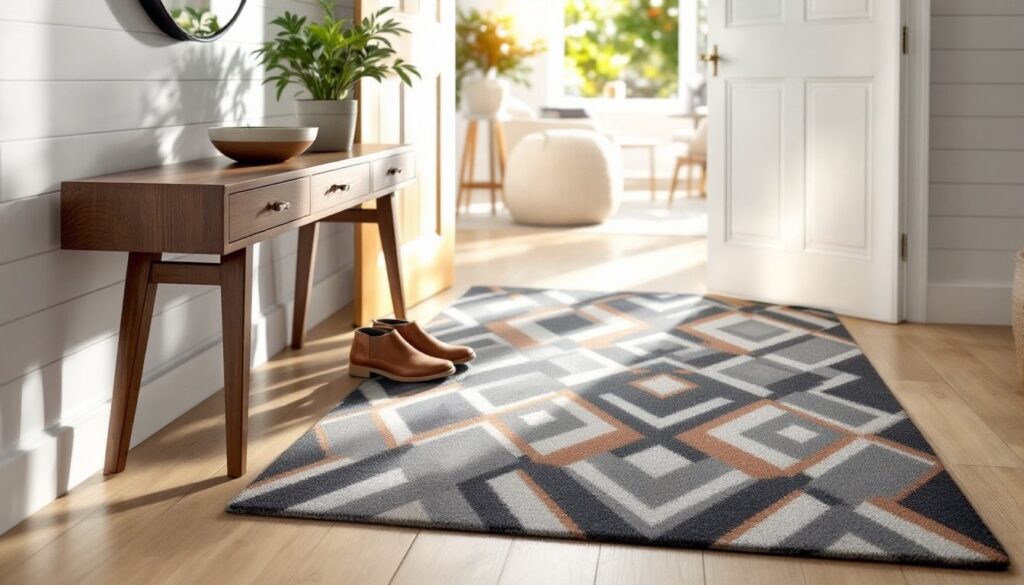
Practical tip: Dark patterns with varied colors hide dirt better than light solids. A charcoal-and-rust geometric will camouflage mud: a cream runner with a single accent stripe won’t.
For homes with colorful or eclectic interiors, pull one accent color from adjacent rooms into the rug. This creates visual flow without matchy-matchy coordination. A teal entryway rug that echoes your living room pillows ties spaces together.
Neutral and Natural Rugs for Timeless Appeal
Neutral rugs, beige, gray, taupe, or natural jute tones, work in nearly any home and adapt as your style evolves. They’re especially smart for rental properties or homes staged for sale.
Textured neutrals (braided jute, looped wool, or ribbed polypropylene) add visual interest without color commitment. A chunky-weave natural fiber rug feels casual and coastal: a tight-weave gray wool reads more formal.
These rugs also make great underlayers if you want to experiment with seasonal or trendy pieces on top. Swap in a patterned runner for fall, pull it for summer, and the neutral base still looks complete.
Interior design resources often highlight neutral rugs as the easiest starting point for beginners, they’re forgiving, versatile, and easy to clean without worrying about color bleed or fading.
Layering Rugs for Added Depth and Texture
Layering isn’t just for living rooms. In larger entryways (6′ x 8′ or bigger), placing a smaller, patterned rug over a larger neutral base adds dimension and lets you refresh the look without replacing the entire floor covering.
How to layer effectively:
- Base layer: Use a larger, low-pile rug in a neutral tone (jute, sisal, or a flat-weave polypropylene). This should cover most of the floor space and define the entry zone.
- Top layer: Add a smaller, higher-contrast rug (2′ x 3′ or 2.5′ x 4′) centered in the traffic path or under a console table. This is where you introduce color, pattern, or texture.
Securing the layers: Rug pads are non-negotiable. Place a thin pad (1/8″ felt-and-rubber combo) between the floor and the base rug, and another between the two rugs. This prevents slipping, reduces wear from friction, and keeps edges from curling.
Material pairing: Pair a natural fiber base (jute or sisal) with a synthetic or wool top layer. The textural contrast, rough under smooth, creates visual interest. Avoid layering two high-pile rugs: they’ll bunch and create a tripping hazard.
When not to layer: In narrow entries (under 4′ wide), layering clutters the space. Stick to a single, well-sized rug. Also skip layering if your entry has a steep grade change or a door that swings inward, extra thickness increases trip risk.
Many curated entryway rug collections showcase layered setups that balance durability with style, proving that practical doesn’t have to mean boring.
Final consideration: Whatever style or material you choose, use a rug pad rated for your floor type. Felt-and-rubber pads work on hardwood and tile: rubber-only can discolor some finishes. If you’re unsure, test a small piece in an inconspicuous spot for 48 hours before committing.
An entryway rug is one of the few decor elements that earns its keep daily. Choose for durability first, size second, and style third, and you’ll have a piece that looks good and works hard for years.