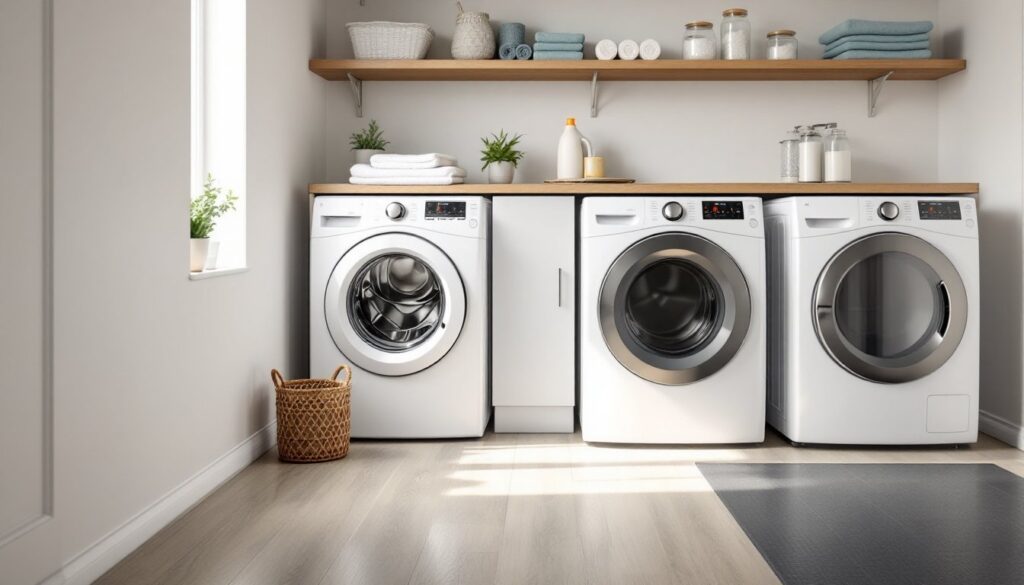
Laundry rooms take a beating. Between wet clothes dripping onto the floor, detergent spills, heavy appliances, and constant foot traffic, the flooring in this space needs to handle moisture, scratches, and stains without falling apart. Choosing the wrong material means you’ll be dealing with warped boards, cracked tiles, or peeling edges within a few years. The good news? There are plenty of durable, water-resistant options that don’t sacrifice style. Whether you’re working with a cramped closet setup or a spacious multipurpose room, the right flooring can transform the space into a functional, attractive area that holds up to daily wear.
Table of Contents
ToggleKey Takeaways
- Laundry room flooring must prioritize water resistance, durability, and easy maintenance to withstand moisture, heavy appliances, and daily spills.
- Luxury vinyl plank (LVP) is the top choice for laundry rooms, offering waterproof protection, DIY installation, and cost-effective durability at $2 to $7 per square foot.
- Porcelain tile provides virtually indestructible, scratch-resistant protection but requires professional installation and grout maintenance to prevent staining.
- Sheet vinyl is a budget-friendly flooring option ideal for small laundry rooms, costing just $0.50 to $3 per square foot and installable in a single afternoon.
- Epoxy-coated or polished concrete delivers modern industrial appeal and seamless waterproof protection, though it can be slippery and unforgiving underfoot.
- Cork and rubber flooring offer eco-friendly, comfortable alternatives for moisture-resistant surfaces, with cork requiring periodic sealing and rubber providing superior durability under heavy equipment.
What Makes Great Laundry Room Flooring?
Not every flooring material belongs in a laundry room. This space has unique demands that rule out delicate or moisture-sensitive options.
Water resistance is non-negotiable. Washing machines can leak, wet clothes drip, and humidity builds up during drying cycles. Any flooring that swells, warps, or stains when exposed to moisture will fail quickly. Look for materials rated for wet areas, the same stuff you’d install in a bathroom.
Durability matters because laundry rooms see heavy equipment. Washers and dryers weigh hundreds of pounds, and you’ll be moving laundry baskets, detergent jugs, and other supplies across the floor daily. The surface needs to resist scratches, dents, and scuffs.
Easy maintenance keeps the room functional. Spills happen, lint accumulates, and dirt gets tracked in. Choose flooring that cleans up with a quick sweep and mop, nothing that requires special treatments or constant resealing.
Slip resistance is a safety factor. Wet floors are a hazard, especially in socks. Textured surfaces or matte finishes provide better traction than polished materials.
Finally, installation complexity affects both cost and timeline. Some materials are DIY-friendly, while others require professional help, subfloor prep, or adhesives that need days to cure. Factor in your skill level and whether you can manage downtime during installation.
Luxury Vinyl Plank: The Top Choice for Busy Laundry Rooms
Luxury vinyl plank (LVP) dominates laundry room flooring for good reason. It’s waterproof, durable, affordable, and mimics the look of hardwood or stone without the maintenance headaches.
LVP consists of multiple layers: a waterproof core (usually WPC or SPC), a photographic layer that replicates wood or tile, and a wear layer that resists scratches. The wear layer thickness matters, look for at least 12 mil for residential use, or 20 mil if you’ve got kids, pets, or heavy traffic. Thicker wear layers hold up better to dropped detergent bottles and dragged laundry baskets.
Installation is straightforward for most DIYers. Click-lock LVP floats over the subfloor without glue or nails, so you can handle it solo over a weekend. Make sure the subfloor is flat, LVP tolerates minor imperfections, but anything more than 3/16 inch over 10 feet will cause the planks to buckle or separate. Use self-leveling compound if needed.
Waterproofing is genuine, not just water-resistant. Even when planning your flooring design, standing water won’t damage the material, though you should still wipe up spills promptly to avoid slipping hazards or mildew under edges.
Cost runs from $2 to $7 per square foot for quality LVP, depending on thickness and finish. Budget an extra $0.50 to $1 per square foot for underlayment if the product doesn’t include an attached pad.
One caution: LVP can dent under extreme point loads. Use appliance pads or plywood under washer and dryer feet to distribute weight and prevent permanent dimples.
Porcelain and Ceramic Tile: Classic Waterproof Protection
Tile has been a laundry room staple for decades because it’s virtually indestructible when installed correctly. Porcelain tile is denser and less porous than ceramic, making it the better choice for high-moisture areas.
Both materials are waterproof, scratch-resistant, and easy to clean. Tile won’t dent under heavy appliances, and it handles temperature swings without expanding or contracting. You can find tiles in endless colors, patterns, and sizes, from classic subway tile to large-format 12×24-inch planks.
Installation requires more skill than LVP. You’ll need to set tiles in thinset mortar over a flat, stable subfloor, typically cement backer board over plywood. Cutting tiles around corners, outlets, and appliances demands a wet saw or tile cutter. Grout lines need to be sealed with a penetrating sealer to resist stains and moisture infiltration. Plan on a full weekend for a small laundry room, or hire a tile setter if you’re not confident with mortar and spacers.
Grout maintenance is the trade-off. Even sealed grout can darken over time from dirt and spills. Use epoxy grout instead of traditional cement grout if you want to skip resealing, it’s stain-proof and waterproof, though it’s trickier to work with and costs more.
Tile feels cold and hard underfoot, which some homeowners dislike. Consider adding an area rug in front of the machines if you’ll be standing for long stretches folding clothes. Tile also amplifies noise from dropped items or running appliances.
Cost varies widely: ceramic starts around $1 to $5 per square foot, porcelain runs $3 to $10, and installation adds another $5 to $15 per square foot if you hire a pro. According to cost breakdowns from renovation experts, tile labor often doubles the material cost.
Sheet Vinyl: Budget-Friendly and Easy to Install
Sheet vinyl is the workhorse option for small laundry room flooring ideas. It’s inexpensive, waterproof, and can be installed in a single afternoon with minimal tools.
Unlike LVP, sheet vinyl comes in wide rolls, typically 6 or 12 feet, so you can cover most laundry rooms without seams. Fewer seams mean fewer opportunities for water to seep underneath. The material is flexible, cushioned underfoot, and available in designs that mimic tile, wood, or stone.
Installation involves rolling out the vinyl, cutting it to fit with a utility knife, and securing it with adhesive or double-sided tape around the perimeter. For a temporary or rental-friendly option, some products use peel-and-stick backing. Make sure the subfloor is smooth and clean, any debris or bumps will telegraph through the thin vinyl.
Drawbacks include lower durability compared to LVP or tile. Sheet vinyl can tear or puncture under sharp objects, and it’s more prone to fading in direct sunlight. It also doesn’t add resale value the way tile or luxury vinyl does.
Cost is the big advantage: $0.50 to $3 per square foot for material. Installation is easy enough for most DIYers, though tight corners and angles around cabinets require patience and a sharp blade.
For best results, choose fiberglass-backed vinyl over felt-backed. Fiberglass resists moisture better and won’t develop mold if water gets underneath. Let the vinyl acclimate in the room for 24 hours before installation to prevent shrinkage or expansion.
Concrete and Epoxy Floors: Modern Industrial Appeal
If your laundry room has a concrete slab subfloor, you might already have finished flooring, you just need to seal it. Polished or epoxy-coated concrete delivers an industrial, modern look that’s nearly indestructible.
Polished concrete involves grinding the surface with progressively finer diamond pads until it’s smooth and glossy. A penetrating sealer protects against stains and moisture. The process requires a concrete grinder (rentable from tool stores) and takes a weekend for a small room. Polished concrete is hard, cold, and reflective, great for utility spaces but not cozy.
Epoxy coating adds color and texture. You mix two-part epoxy resin and spread it over the concrete with a roller, then broadcast decorative chips or leave it smooth. Epoxy is waterproof, chemical-resistant, and easy to clean. It’s popular in garages and basements but works equally well in laundry rooms.
Surface prep is critical. The concrete must be clean, dry, and free of oils or sealers. Use a degreaser and etch the surface with muriatic acid or a concrete grinder to open the pores for better adhesion. Skipping prep causes epoxy to peel or bubble.
Cost for DIY epoxy kits runs $2 to $8 per square foot depending on thickness and finish. Professional polishing or epoxy application costs $3 to $12 per square foot. Many home improvement guides recommend epoxy for moisture-prone areas due to its seamless, waterproof surface.
Both options are slippery when wet unless you add a non-slip additive to the topcoat. Concrete is also unforgiving, dropped glassware shatters, and standing for long periods can be hard on knees and joints.
Cork and Rubber: Comfortable and Eco-Friendly Options
For homeowners prioritizing comfort and sustainability, cork and rubber flooring offer unique benefits.
Cork is harvested from tree bark without killing the tree, making it renewable. It’s naturally antimicrobial, cushioned underfoot, and provides thermal insulation, your feet won’t freeze on winter mornings. Cork also dampens sound, which helps if the laundry room shares a wall with living spaces.
Cork tiles or planks install similarly to LVP, with click-lock edges or glue-down adhesive. The material is water-resistant but not waterproof, so it needs a polyurethane or wax seal reapplied every few years. Standing water can damage cork, so wipe up spills promptly. After organizing your laundry space, cork’s soft surface makes extended standing more comfortable.
Rubber flooring, often seen in gyms, is extremely durable, waterproof, and slip-resistant. It comes in tiles or rolls and handles heavy appliances without denting. Rubber is easy to clean and cushions dropped items, reducing breakage.
Installation involves gluing rubber tiles or rolling out sheets and trimming to fit. The material has a distinct smell when new, which fades over a few weeks. Choose low-VOC or natural rubber to minimize off-gassing.
Cost for cork runs $3 to $8 per square foot, while rubber ranges from $2 to $10 depending on thickness and quality. Both materials are DIY-friendly but require a smooth, dry subfloor.
Neither cork nor rubber offers the refined look of tile or LVP, so they’re better suited to utilitarian spaces than design showcases. But, according to insights from remodeling design resources, eco-conscious homeowners increasingly choose these materials for their environmental benefits.
Conclusion
Laundry room flooring doesn’t have to be an afterthought. Whether prioritizing budget, durability, comfort, or style, there’s a material that fits the bill. LVP offers the best all-around performance for most homeowners, while tile provides unmatched longevity. Sheet vinyl works for tight budgets, and concrete or epoxy delivers industrial aesthetics. Cork and rubber suit those seeking eco-friendly, cushioned surfaces. Evaluate moisture exposure, traffic patterns, and installation skills before committing. A well-chosen floor will handle years of spills, foot traffic, and heavy appliances without needing replacement.