
Is your garage looking more like a disaster zone than a functioning space? Fear not. With just a sprinkle of creativity and a dash of organization, anyone can turn that chaotic pit into a neat haven. And guess what? You don’t even need to empty your wallet. Here are five quick and cheap garage organizing ideas that will have your friends wondering if you’ve hired a professional organizer, spoiler alert: you didn’t. Let’s immerse, shall we?
Assessing Your Garage Space
Before jumping into organizing, it’s crucial to assess your garage space. Take a stroll through, inspect every nook and cranny, and identify what truly resides there. Is it a graveyard of unneeded items, or is it simply overflowing with essentials you just can’t find? Don’t skip this step. It’s like the foundation of a house: without it, everything else crumbles.
Consider making a list of items you want to keep, donate, or toss. Once that’s done, it’s time to visualize how the space can change. Can you convert that unused corner into a mini workbench? Is there a wall begging for hooks? Get creative.
1. Use Vertical Storage Solutions
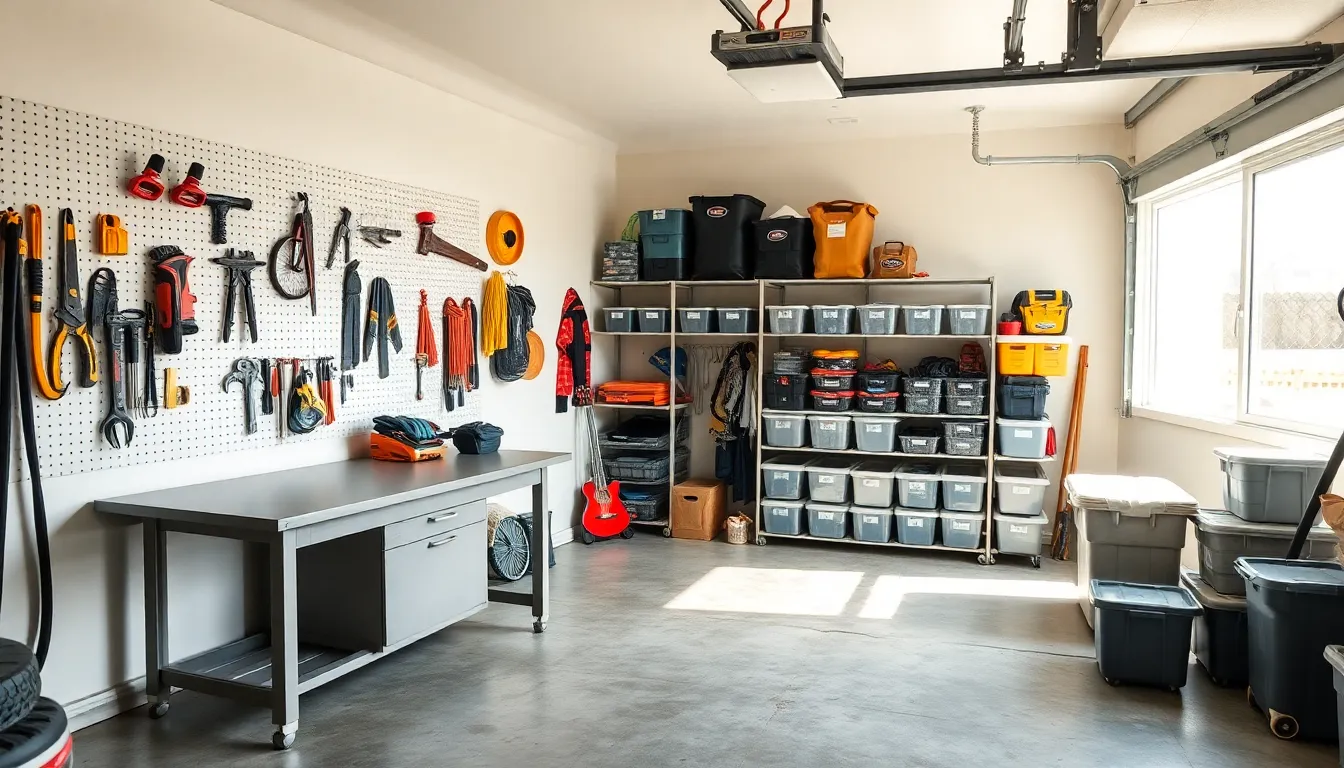
When it comes to maximizing garage space, think up, not out. Vertical storage solutions are your best friend here. Shelving units, pegboards, and wall-mounted racks can transform ample floor space into functional storage. Install floating shelves in unused corners or hang a pegboard to keep tools visible and accessible.
One simple option is to use ceiling-mounted racks to store seasonal items. This way, holiday decorations or outdoor gear can be tucked away yet easy to access when needed. Vertical storage is a game changer for anyone drowning in clutter.
2. Containerize Your Clutter
Clutter connoisseurs, rejoice. Containerizing your garage chaos is not only smart but incredibly efficient. Grab plastic bins, cardboard boxes, or recycled containers from your kitchen and start categorizing. Tools in one, gardening supplies in another, label them to avoid future scavenger hunts.
Consider stackable bins to optimize vertical space. Clear containers can be especially handy, allowing you to see what’s inside without opening each one. Efficiency at its finest. Plus, they make it easier to find that elusive can of spray paint when you need it.
3. Repurpose Household Items
Before you toss that old bookshelf or those mismatched mugs, consider repurposing them for garage organization. An old bookshelf can be transformed into a fantastic gardening station, while mugs can hold small tools and utensils.
Think creatively. Old pallets can make for a charming tool holder, while wine crates can store everything from toys to garden supplies. The beauty of repurposing is not just cost-saving, but it adds a personal touch, letting your garage reflect your flair.
4. Create a Tool Wall
A tool wall can be a fantastic addition to any garage. Not only does it keep tools organized, but it also turns them into artwork, seriously, who doesn’t want to show off their tools? Use pegboards or magnetic strips to hang larger tools like hammers and wrenches. You can even repurpose jars for screws, nails, and other small items.
The key here is to keep everything within arm’s reach. This organization method saves time during projects and makes it easier for you to see what you have. No more buying another wrench because you can’t find the one you already own.
5. Implement a Seasonal Rotating System
Just like your wardrobe, your garage can benefit from a seasonal rotation. By rotating items based on the seasons, you ensure that the things you use frequently are accessible while less-used items can be pushed to the back or higher up.
For instance, in winter, keep the snow shovels and de-icers at the forefront while moving summer gear to the back. Come summer, flip the order. This method not only creates more space but also keeps your garage tailored to your needs throughout the year.
Tips for Maintaining an Organized Garage
Now that the garage is organized, how do you keep it that way? First, develop a cleaning schedule. Whether it’s weekly or monthly, set aside some time to reassess and tidy up.
Regularly review what items are still being used, and consider donating or eliminating what you don’t need. Also, make it a habit to put items back in their designated spots after each use. Reinforcing these small habits will go a long way in maintaining your organized oasis.